
For corporations, Income Summary is closed entirely to “Retained Earnings”. The Income Summary balance is ultimately closed to the capital account. Business Consulting Company, which closes its accounts at the end of the year, provides you with the following adjusted trial balance as of December 31, https://darazali.online/commercial-shipping-invoice-template-in-word-psd/ 2015.
Timeliness and Order: Prioritizing Adjusting Over Closing Entries
Closing all temporary accounts to the retained earnings account is faster than using the income summary account method because it saves a step. There is no need to close temporary accounts to another temporary account (income summary account) in order to then close that again. To close revenue accounts, you first transfer their balances to the income summary account.
- The accounts that remain in the accounting equation after closing are called permanent accounts.
- Now that all of Paul’s AJEs are made in his accounting system, he can record them on the accounting worksheet and prepare an adjusted trial balance.
- Master the fundamentals of financial accounting with our Accounting for Financial Analysts Course.
- We will debit the revenue accounts and credit the Income Summary account.
- If your company has been successful, and expenses haven’t swallowed up your revenues, you’ll see a net profit looking back at you from the Income Summary account.
- Closing entries in accounting are journal entries used to transfer balances from temporary accounts (revenue, expenses, and dividends) to permanent accounts at the end of an accounting period.
Closing Entry in Accounting: Definition, Example, and Best Practices

Book a 30-minute call to see how our intelligent software can give you more insights and control over your data and reporting. Solutions like Solvexia can transform days of manual closing work into an efficient, accurate process that takes just hours to complete. Corporate governance refers to the system closing entries and processes that a company uses to direct and manage…
Frasker Corp. Closing Entries
A company will see its revenue andexpense accounts set back to zero, but its assets and liabilitieswill maintain a balance. In summary, the accountant resets thetemporary accounts to zero by transferring the balances topermanent accounts. Temporary accounts are used to compile transactions that impact the profit or loss of a business during a year, while permanent accounts maintain an ongoing balance over time. Examples of temporary accounts are the revenue, expense, and dividends paid accounts. Any account listed in the balance sheet (except for dividends paid) is a permanent account. A temporary account accumulates balances for a single accounting period, whereas a permanent account stores balances over multiple periods.
- This process helps owners stay on track with business goals and prepare for filing their income tax returns.
- ‘Retained earnings‘ account is credited to record the closing entry for income summary.
- When making closing entries, the revenue, expense, and dividend account balances are moved to the retained earnings permanent account.
- You need to create closing journal entries by debiting and crediting the right accounts.
- Discover how this important step in finance ensures accurate financial statements.
- Now, it’s time to close the income summary to the retained earnings (since we’re dealing with a company, not a small business or sole proprietorship).
- One of the best practices for year-end closing is to start preparing early.
Consolidation & Reporting
Temporary accounts include such transactions as revenue, expenses, and dividends, all of which affect the profitability of a business only in the period in which they are reported. They will be zeroed out, and the accounts closed, at the end of the period. A net loss would decrease retained earnings so we would do the opposite in this journal entry by debiting Retained Earnings and CARES Act crediting Income Summary. When you’re using a manual accounting system, an additional step after posting the closing entries is to double-rule all general ledger accounts. The above closing entries are recorded in both the general journal and the general ledger. If you’re using a computerized accounting system, the software may automatically perform the closing process.
- Meanwhile, investors view closing entries as a signal that the company is ready to report its financial health, upon which investment decisions can be made.
- If there’s a net loss, debit Retained Earnings and credit Income Summary.
- If there is a net profit, the balance of the income summary account is also zeroed by debiting the income summary account and crediting the capital account.
- Explore how Solvexia’s automation solutions can transform your closing process and elevate your financial operations to the next level.
- The income summary account is a temporary account used to store income statement account balances, revenue and expense accounts, during the closing entry step of the accounting cycle.
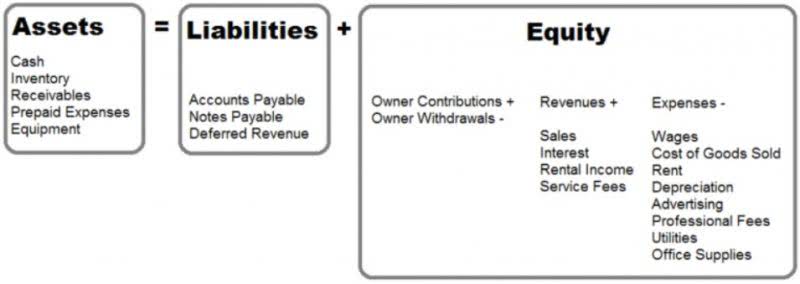
All accounts in the statement of financial position or balance sheet, such as cash, receivables, fixed assets, payables, and equity are permanent accounts. The permanent account to which balances are transferred depend upon the type of business. In case of a company, retained earnings account, and in case of a firm or a sole proprietorship, owner’s capital account receives the balances of temporary accounts. Now that Paul’s books are completely closed for the year, he can prepare the post closing trial balance and reopen his books with reversing entries in the next steps of the accounting cycle. Then the income summary account is zeroed out and transfers its balance to the retained earnings (for corporations) or capital accounts (for partnerships). This transfers the income or loss from an income statement account to a balance sheet account.
